Compare the Possible Results
- New
- Changed
- Removed
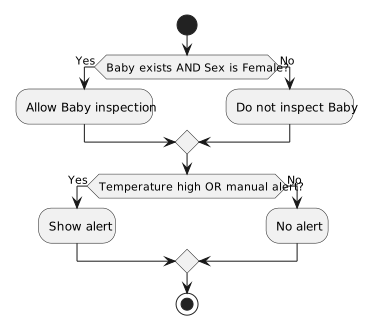
For &&, one false operand makes the result false. For ||, one true operand makes the result true. Parentheses clarify any condition that combines both operators in one expression; operator precedence becomes relevant once they appear together.
Trace the Outcome
Trace canInspectBaby for a female Animal without a Baby, a male Animal with a Baby, and a female Animal with a Baby. Then trace showAlert when temperature is 75.0 and manualAlert is true.
A truth table can help when the condition is unfamiliar. For a && b, the four input pairs produce false, false, false, and true in order `(false,false)`, `(false,true)`, `(true,false)`, `(true,true)`. For a || b, only the first pair is false. The order in which operands run is a separate short-circuit question.