- New
- Changed
- Removed
An || expression behaves differently: if its left side is already true, C# skips the right side. Short-circuiting does not change Boolean logic; it changes which expressions need to run. This matters when a later expression reads an object field or calls a method.
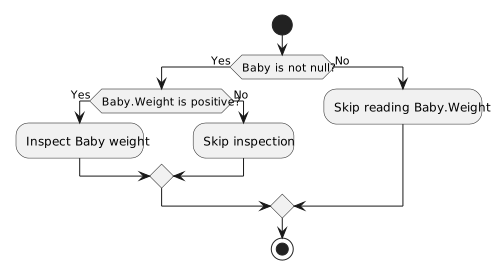
Pause at the if with Baby null, then with a Baby whose Weight is positive. Predict whether the second operand will be evaluated each time. Never reverse the operands in this example: accessing this.Baby.Weight first would be unsafe when Baby is null.
The left-to-right order is part of this safety pattern. this.Baby != null && this.Baby.Weight > 0 checks the reference before reading Weight. this.Baby.Weight > 0 && this.Baby != null tries to read Weight first and can fail. For ||, put an inexpensive or sufficient test first when you intentionally want to skip the second operand after a true result.