1.1.21 Referencing Nested Objects

One Object Can Give Access to Another Related Object

After you assign an object relationship:

C#
player1.team = team1;

the Player object has a reference to a Team object.

The program can follow that relationship with the dot operator.

For example:

C#
player1.team

means:

the Team object referenced by the team field on player1

If the Team has a field named:

Plain text
name

then:

C#
player1.team.name

follows the relationship one step farther.

Read a Nested Expression From Left to Right

Consider:

C#
player1.team.name

Read it in stages.

player1

Start with the Player object.

.team

Access the Player's Team reference.

.name

Access the name field on that Team object.

Plain language:

Get player1's Team object, then get that Team object's name.

Nested Access Mirrors an Object Relationship

Suppose UML contains:

Plain text
player1 : Player  --------  team1 : Team
                            ----------------
                            name = "Wildcats"

After the relationship is assigned in C#:

C#
player1.team = team1;

the expression:

C#
player1.team.name

can reach the Team object's name.

The nested source follows the relationship shown in UML.

Each Step Needs a Real Object Reference

For:

C#
player1.team.name

the program needs:

Plain text
player1 → Player object

and:

Plain text
player1.team → Team object

If either required reference is null, the member-access chain cannot continue normally.

That is why nested member access frequently appears in NullReferenceException diagnosis.

Break the Chain Apart When Debugging

A long expression can hide which reference failed.

Instead of thinking about:

C#
player1.team.name

as one indivisible expression, think:

Plain text
Step 1: player1
Step 2: player1.team
Step 3: player1.team.name

Inspect Step 1.

Then Step 2.

Once you find null, you know the later step cannot succeed.

Assign Relationships Before Following Them

This sequence is unsafe if team is still null:

C#
Player player1 = new Player();
player1.team.name = "Wildcats";

The program tries to reach:

Plain text
player1.team

before the relationship has been established.

A relationship-aware sequence is:

C#
Player player1 = new Player();
Team team1 = new Team();

player1.team = team1;
team1.name = "Wildcats";

Now the related Team object exists and the Player points to it before nested access depends on that relationship.

Use the Direct Reference When It Is Clearer

Once team1 exists, these expressions can refer to the same Team object's name after the relationship is assigned:

C#
team1.name

and:

C#
player1.team.name

The first starts directly from team1.

The second demonstrates the relationship path through player1.

Choose the expression required by the current task and supplied source.

Do not rewrite code merely to prefer one form.

Nested Access Can Continue Through More Than One Relationship

You may eventually encounter longer chains.

For now, do not rush into complicated object graphs.

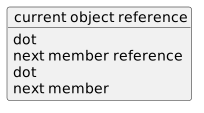
Use the same rule repeatedly:

Plain text
current object/reference
      ↓ dot
next member/reference
      ↓ dot
next member

Every intermediate reference must lead to the expected object.

Keep the Model Visible

When reading:

C#
player1.team.name

picture:

Plain text
player1 : Player
      |
      v
team1 : Team
name = "Wildcats"

That visual model makes the member chain easier to interpret.

The next activity uses the debugger to inspect nested objects directly.