Objects can be related to other objects.
Suppose the program has:
Player
Team
and the supplied Player type has a field that can refer to a Team object.
Conceptually:
Team team;
A Player object's team field can then store a reference to a Team object.
Suppose the UML shows:
player1 : Player -------- team1 : Team
A basic C# setup begins by creating the two objects:
Player player1 = new Player();
Team team1 = new Team();
At this point:
The relationship between them has not automatically been created.
To connect the Player to the Team:
player1.team = team1;
Read the statement from right to left:
Take the object reference stored in
team1and assign that reference to theteamfield onplayer1.
The field now refers to the Team object represented by team1.
This statement:
player1.team = team1;
does not contain:
new Team()
Therefore it does not create a new Team object.
It connects the Player's field to an already created Team object.
Keep these operations distinct.
Team team1 = new Team();
player1.team = team1;
UML:
player1 : Player -------- team1 : Team
C#:
player1.team = team1;
The UML line says the specific objects are related.
The C# reference assignment establishes the relationship in the running program.
The names of the actual reference fields come from the supplied project.
Use them exactly.
If the Player field is declared to hold:
Team
then assigning a Team reference is compatible:
player1.team = team1;
Assigning unrelated text such as:
player1.team = "Wildcats";
does not create the object relationship.
The display name of the team and the Team object are different things.
Suppose:
Player player1 = new Player();
Team team1 = new Team();
player1.team = team1;
The Player now refers to the Team object even if:
team1.name
still has its default value.
Object relationship and object field values are separate parts of state.
You can assign the relationship and then assign the Team's descriptive fields according to the required sequence.
nullA new reference field may initially be:
null
After:
player1.team = team1;
it can refer to the Team object.
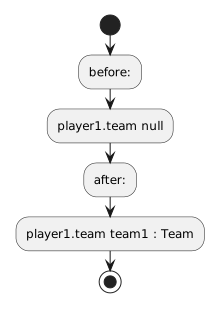
Conceptually:
before:
player1.team → null
after:
player1.team → team1 : Team
That transition is central to preventing a null-reference failure when later code needs the related Team.
Pause before:
player1.team = team1;
Inspect:
player1.team
Then step over the assignment.
Inspect again.
You should be able to observe the reference change from its earlier state to a Team object reference.
That is runtime evidence that the relationship assignment executed.
Do not create extra objects simply to fill reference fields.
For:
player1.team = team1;
ask:
Which UML relationship does this assignment represent?
If the current object diagram does not support that connection, do not invent it.
Object-reference assignment is how the code expresses modeled relationships.