Build the Diagram in Violet
- Create a class diagram with a
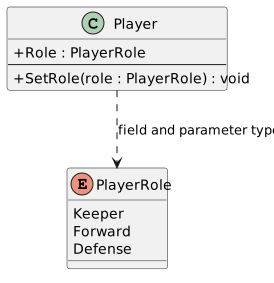
Playerclass box and another box representingPlayerRole. - Mark the latter with the visible stereotype
<<enumeration>>and listKeeper,Forward, andDefenseas named values, one per line. These are not operations. - Inside Player enter attribute
+Role : PlayerRoleand operation+SetRole(role : PlayerRole) : void. - Draw a dashed type-use dependency from Player toward PlayerRole, labeled
field and parameter type. Do not draw a field-reference association to an imagined enum object. - Save and read the same enum type in the field, parameter, and enumeration heading. Do not substitute string or a particular member into the declaration.
Compare the Completed Soccer Diagram
Compare this reference with the diagram you built in Violet. Layout may differ; the source meaning, labels, and relevant connections should agree.
- New
- Changed
- Removed
Read the Contract One Part at a Time
Role may currently contain Forward for Jordan, but that current choice does not belong as a fixed value in the class operation signature.