Build the Diagram in Violet
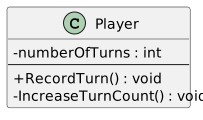
- Create a class diagram with one
Playerbox. - In the attributes compartment enter
-numberOfTurns : int. Preserve the minus marker for private. - In operations enter
+RecordTurn() : voidand-IncreaseTurnCount() : voidon separate lines. - Keep all three members visible in this design view. Do not underline them or place their execution order into the class box.
- Save and read the two operation contracts: external code can call RecordTurn, while the private helper is used by the class implementation.
Compare the Completed Soccer Diagram
Compare this reference with the diagram you built in Violet. Layout may differ; the source meaning, labels, and relevant connections should agree.
- New
- Changed
- Removed
Read the Contract One Part at a Time
External code can call RecordTurn. The Player implementation can call its own private helper, which updates the private field.