A Parameter Is a Separate Variable
For an ordinary C# method parameter, the reference value is copied into the parameter. The caller's variable and the parameter start as separate paths to the same object.
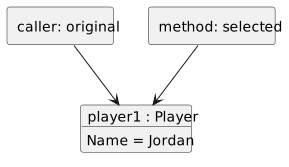
- New
- Changed
- Removed
For an ordinary C# method parameter, the reference value is copied into the parameter. The caller's variable and the parameter start as separate paths to the same object.
Inside a method, this statement creates a Player and redirects `selected`:
selected = new Player();The caller's variable has not been assigned a new reference. It still leads to the original Player.
If `selected.Name` then becomes Casey, the new Player has that name. The original Player may still have the name Jordan. The change follows the parameter's new destination.
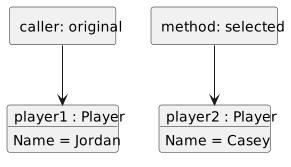
This statement does not redirect the parameter:
selected.Name = "Casey";If `selected` still refers to the original Player, its Name changes and the caller sees Casey through `original`.
The reference value is copied into an ordinary parameter. This is why a method can change a shared object's fields but cannot redirect the caller's variable by assigning its own parameter. C# `ref` parameters follow different rules and are a separate feature.