Plan the Interaction First
Imagine this soccer interaction:
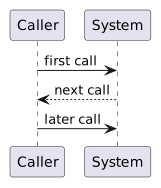
- New
- Changed
- Removed
Do not place messages based only on visual convenience.
A UML sequence diagram focuses on:
That is different from:
A sequence diagram emphasizes object-to-object calls.
Imagine this soccer interaction:
Do not place messages based only on visual convenience.
Use the exact required filename and location.
The Violet source should remain editable because later feedback may require revision.
A useful plain-language reading is:
If the diagram cannot be explained clearly in a sentence, revise its participants or messages.