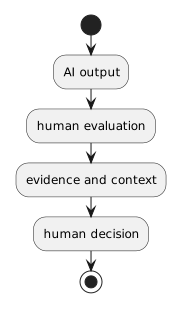
Human Judgment Uses More Than the AI Response
A responsible decision can require information the AI does not have.
For example:
- current course requirements;
- workplace policies;
- local technical configuration;
- user needs;
- privacy restrictions;
- consequences of an error.
The person responsible for the task needs to bring those constraints into the decision.
Good Judgment Includes Knowing When You Do Not Know
Responsible human judgment is not:
People can also:
- miss information;
- make assumptions;
- misunderstand evidence;
- rely on outdated knowledge.
A strong human decision includes the ability to say:
That is why Verify is part of the decision framework.
Expertise Changes What You Can Evaluate
A beginner may recognize that a generated C# example looks plausible without being able to determine whether it is safe or appropriate for a complex production system.
That limitation matters.
When the consequence is significant, seek appropriate expertise or authoritative evidence rather than pretending to evaluate beyond your current knowledge.
Human judgment includes knowing when to involve another qualified person.
The Final User Is Responsible for the Context of Use
Suppose AI produces an email draft.
The AI does not know every relationship, policy, or consequence surrounding the message.
The person sending it should decide:
- whether the information is accurate;
- whether the tone fits;
- whether private information should be removed;
- whether the message follows the relevant expectations.
The final use occurs in a real context.
That context is part of the human responsibility.
Human Judgment Should Be Explainable
A strong decision can be justified.
For example:
or:
The explanation connects the decision to evidence and requirements.
Judgment Improves Through a Repeatable Process
A useful process is:
- Understand the task.
- Identify the important claims or choices.
- Consider the source of the information.
- Check for missing context or bias.
- Verify important facts when needed.
- Consider privacy and rules.
- Choose Accept, Revise, Verify, or Reject.
- Take responsibility for the final result.
The process matters because confidence alone is not evidence.
The Main Principle
AI can support human work.
It should not replace the responsibility to understand, evaluate, and justify the result.
The final step is a human decision informed by evidence.