Build the Diagram in Violet
- Create a sequence diagram containing the existing
controller : Controllerlifeline. - Place
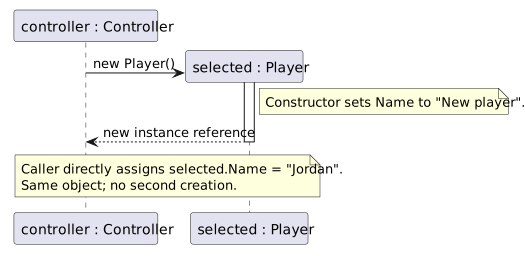
selected : Playerwith its heading at the incoming creation request rather than at the top of the interaction. - Draw
new Player()from controller to the new participant and show the constructor activation. NoteConstructor sets Name to "New player". - Show creation completion back to the caller. Beneath it, add a note
Caller directly assigns selected.Name = "Jordan"; same object. Do not turn that public field assignment into an invented setter call. - Save and count the creation messages. There should be one Player participant and one event beginning its lifetime.
Compare the Completed Soccer Diagram
Compare this reference with the diagram you built in Violet. Layout may differ; the source meaning, labels, and relevant connections should agree.
- New
- Changed
- Removed
Trace One Interaction from Top to Bottom
At the constructor's completion, Name is New player. After the following field assignment, it is Jordan. A sequence diagram can annotate these state facts without becoming a full object snapshot.