Build the Diagram in Violet
- Create a sequence diagram with the existing
controller : Controllerlifeline. - Place the new
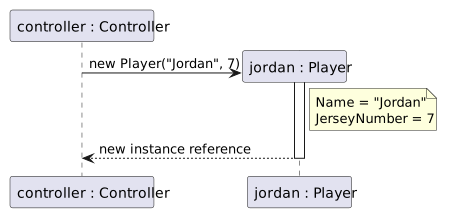
jordan : Playerparticipant so its heading begins at the creation message, below the existing caller's start. - Draw the creation request from controller to that new participant and label it
new Player("Jordan", 7). The actual values travel with this request. - Show the constructor activation. Add a note with
Name = "Jordan"andJerseyNumber = 7to identify the initialized state, then show creation completion returning the new instance reference. - Save and confirm that no part of the Jordan lifeline claims it existed before the request. The local jordan refers to this newly created instance afterward.
Compare the Completed Soccer Diagram
Compare this reference with the diagram you built in Violet. Layout may differ; the source meaning, labels, and relevant connections should agree.
- New
- Changed
- Removed
Trace One Interaction from Top to Bottom
The constructor stores the actual input values. The diagram's completion arrow represents creation expression completion, not a C# return statement written inside the constructor.