Explore the idea
Read the current number of items
Calculate an average safely
Use using System.Collections.Generic; at the top of the C# file, before its class definitions. Place the following statements inside an existing method.
Average goals per round
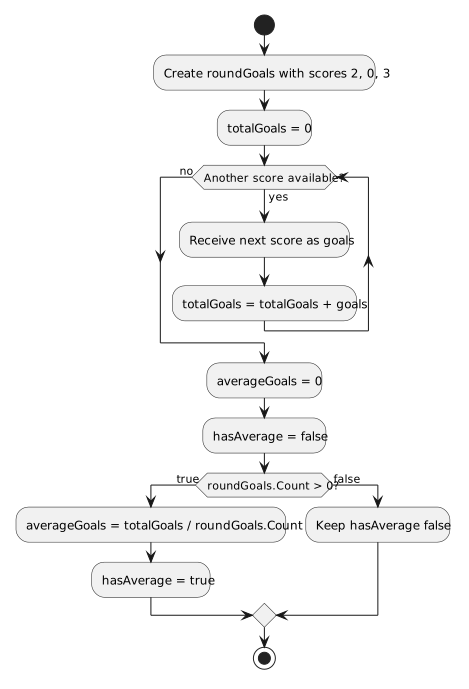
List<int> roundGoals = new List<int>();
roundGoals.Add(2);
roundGoals.Add(0);
roundGoals.Add(3);
double totalGoals = 0;

foreach (int goals in roundGoals)
{
    totalGoals = totalGoals + goals;
}

double averageGoals = 0;
bool hasAverage = false;

if (roundGoals.Count > 0)
{
    averageGoals = totalGoals / roundGoals.Count;
    hasAverage = true;
}
The total progresses from 0 to 2, remains 2, then becomes 5. Count is 3, so averageGoals is approximately 1.67. The zero-score round belongs in the denominator because the question asks about all recorded rounds.
Handle an empty list
| Scores | Count | Total | Average result |
|---|---|---|---|
| 2, 0, 3 | 3 | 5 | About 1.67; hasAverage true |
| 0, 0 | 2 | 0 | 0; hasAverage true |
| No scores | 0 | 0 | No average; hasAverage false |
Trace the worked example
- New
- Changed
- Removed
Predict and check