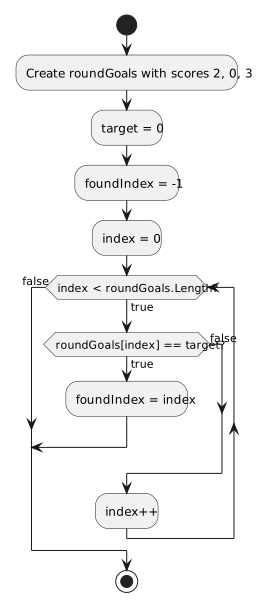
Compare the current element with the target
The first pass reads score 2 from index 0. It does not equal target 0, so the body of the if is skipped. The loop update advances index to 1.
Save the position of the first match
At index 1, the score is 0. The condition is true, so the program stores 1 in foundIndex.
The result is an index, not the matched score. It tells where the coach's requested score was found.
Stop the search once the required answer is known
Break leaves the loop immediately after saving the index. Index 2 is not examined. The header update also does not execute on that early-exit pass.
This search returns the first match because it stops as soon as it finds one.
Keep the no-match result if all checks fail
If the target were 5, every element comparison would be false. The loop would finish normally and foundIndex would stay -1.
Do not use -1 as an element index afterward. It is the marker for an unsuccessful search.
Keep a matching position distinct from the target value
The target is zero goals, but the result for the shown scores is index 1. Storing the matched score instead of the index would lose the location the coach asked to find.
The marker -1 also needs interpretation before any later access. It reports failure; it is not a request to read the element before index zero.