- New
- Changed
- Removed
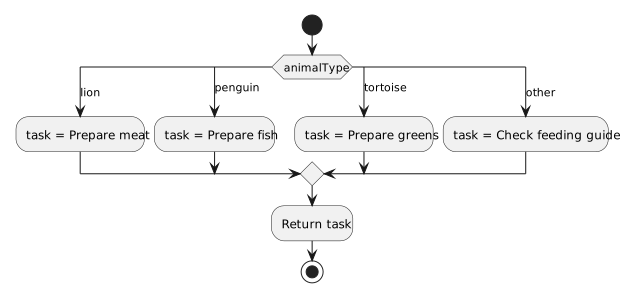
The switch chooses one branch, then return sends its assigned task to the caller. break; exits the switch; return task; ends the method. Use the exact capitalization of case strings or the input will reach default.
Separate the selection from the final return when learning: assign task in the selected case, exit the switch, then return task once. That makes it easier to inspect task at a breakpoint. If a case is added without assigning task, the shared return may not have a valid value. Use a default case to cover values outside the named cases.
Test each listed animal and one unlisted animal. Confirm task is assigned on every path before the shared return. A switch intended to return a value needs a declared return type and a matching value on every route.