Build the Diagram in Violet
- Create existing lifelines
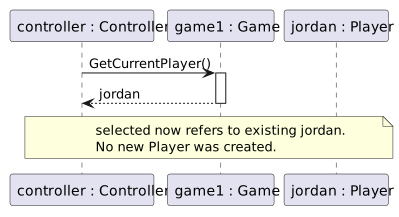
controller : Controller,game1 : Game, andjordan : Player. - Draw
GetCurrentPlayer()from controller to game1 and activate game1 for the call. - Draw a dashed result from game1 back to controller labeled
jordan. End the game activation after that result. - Add the note
selected now refers to existing jordannear the caller and target. Do not draw selected as a fourth instance. - Save and check that no create message or Player-to-controller return has been added. A later method call on selected would require a later message of its own.
Compare the Completed Soccer Diagram
Compare this reference with the diagram you built in Violet. Layout may differ; the source meaning, labels, and relevant connections should agree.
- New
- Changed
- Removed
Trace One Interaction from Top to Bottom
The returned reference gives selected access to Jordan; it does not turn game1 into a Player. A later Player call would need its own message after this return.