C# evaluates conditional AND and OR from left to right and can stop when the answer is known. This is called short-circuit evaluation.
With AND, a false left operand settles the result. With OR, a true left operand settles it.
Read the example once before trying to explain every line. Then use the short explanations below to connect each part of the code with the soccer task.
Player selected = null;
bool canTakeTurn = selected != null && selected.NumberOfTurns < 3;Read the table one row at a time. Check when each value is observed: a value before a statement may differ from the value after that statement runs. Cover the result column and predict an answer before checking it.
| Selected reference | Turn count | AND right side evaluated? | canTakeTurn |
|---|---|---|---|
| Null | Unavailable | No | False |
| Player exists | 2 | Yes | True |
| Player exists | 3 | Yes | False |
Use the diagram to follow the same soccer example in a different form. Start at the beginning and follow one execution at a time. Compare the labeled actions with the source code; do not assume every action in the picture runs.
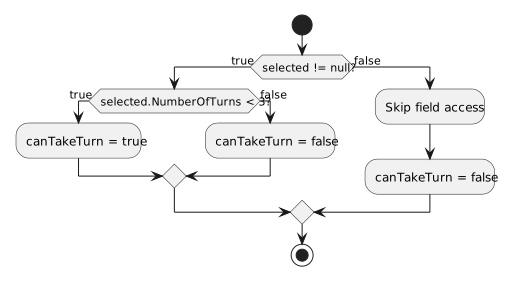
Write your prediction and a short reason first. If you test the change, compare the observed values with that prediction. When they differ, find the first statement or decision where your explanation stops matching the code.