When C# executes:
Player player1 = new Player();
the new Player() expression creates a Player object in memory.
The object can contain state such as:
name
jerseyNumber
team
The exact fields come from the supplied class.
At this stage, think of memory as the working space used by the running program.
After:
Player player1 = new Player();
the name player1 gives the code a way to reach the new Player object.
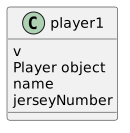
A useful conceptual picture is:
player1
|
v
+------------------+
| Player object |
| name |
| jerseyNumber |
+------------------+
The reference and the object are related, but they are not the same thing.
Suppose the code then executes:
player1.name = "Jordan";
player1.jerseyNumber = 7;
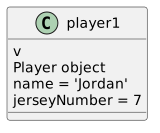
Conceptually, the state can be pictured as:
player1
|
v
+----------------------+
| Player object |
| name = "Jordan" |
| jerseyNumber = 7 |
+----------------------+
The values belong to the object.
The reference gives the program access to that object.
Now create a Team:
Team team1 = new Team();
team1.name = "Wildcats";
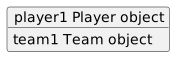
There are now two objects in memory:
player1 → Player object
team1 → Team object
If the Player should refer to the Team:
player1.team = team1;
the objects remain separate. A reference connects them.
Conceptually:
player1 → Player object ──team──→ Team object ← team1
A UML object diagram is a model.
The runtime memory is the actual state created by the executing program.
The UML may show:
player1 : Player -------- team1 : Team
C# instructions create those objects and relationships.
The debugger lets you observe the runtime version.
If the program closes, its normal runtime objects do not remain alive in memory as the same running objects.
Persistent storage is a separate concept.
Do not confuse:
object exists in current program memory
with:
information has been saved to a file
Visual Studio does not show every low-level hardware detail.
It gives you a useful programming view:
That is enough to reason about the object model at this stage.
Conceptual boxes and arrows help you reason about objects.
They are not literal diagrams of physical RAM addresses.
The important relationships are:
null.Later modules explore shared references more deeply.
For now, use memory as the place where the running program's object state exists.