0.6.4 Using Google Sheets

Google Sheets Is a Spreadsheet Environment

Google Sheets provides a browser-based workspace for creating and editing spreadsheets.

You can use it to work with:

The interface may change over time, but the underlying spreadsheet concepts remain stable.

This activity focuses on those durable skills.

Start With the Sheet Structure

When you open a spreadsheet, identify:

A cell reference combines a column and row.

For example:
Plain text
A1

means column A, row 1.

Enter a Simple Table

A structured table begins with headers.

For example:

Plain text
A1: Title
B1: Artist
C1: Genre
D1: Year

Then enter one song per row.

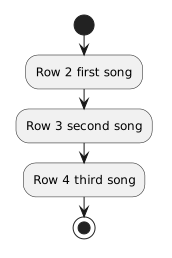
Conceptually:

Plain text
Row 2 → first song
Row 3 → second song
Row 4 → third song

The exact values will come from the course activity or supplied dataset.

Use One Column for One Meaning

If column C is:

Plain text
Genre

keep genre values there.

If column D is:

Plain text
Year

keep release-year values there.

A spreadsheet becomes easier to work with when each column has a consistent purpose.

Edit the Value, Not the Structure, Unless the Task Requires It

When correcting one data value, change the specific cell.

Avoid moving entire rows, merging cells, or rearranging columns unless the activity requires that structural change.

Small, deliberate changes are easier to reason about and reverse.

Add Worksheet Tabs When the Activity Calls for Separate Groups

A spreadsheet file can contain several worksheet tabs.

That can be useful when the activity intentionally separates different kinds of information.

For example, a later music-library activity may organize related information into separate logical tabs.

Do not create extra tabs just to spread the data out.

Use them when the data model or activity purpose calls for separation.

Rename Tabs Meaningfully

When a sheet needs a specific purpose, its tab name should help identify that purpose.

A name such as:

Plain text
Songs

is clearer than:

Plain text
Sheet7

when the sheet actually stores song records.

Use the names required by the current activity when exact names are supplied.

Basic Formatting Can Improve Readability

Simple formatting can make a structured table easier to scan.

For example, you might make header text visually distinct.

Formatting should support the data structure rather than replace it.

A header should be understandable because of its text, not only because it has a particular background color.

Google Sheets Saves Changes to the Online File

Google Sheets normally works with an online document.

As you edit, the service manages the current online version.

This is different from a local text file where you explicitly call a C# write operation.

The user experience is different, but the underlying question remains useful:

Where does the current information live?

In this case, the spreadsheet is managed through the online service rather than only in a local program variable.

Sharing Is Separate From Editing

A spreadsheet can have sharing and access controls.

Do not change sharing settings unless the course activity directs you to do so.

Working with the data and deciding who can access the file are separate responsibilities.

Use the Current Course File

If the course supplies a Google Sheet, work in the supplied file or authorized copy.

Do not silently create a separate spreadsheet with different column names or structure.

The course file gives everyone a shared starting point.

Focus on the Data, Not Interface Memorization

Menu locations and button appearances can change.

The durable skills are:

Those skills transfer across spreadsheet tools.

The next activity focuses on using that environment deliberately to manage structured data.