Build the Diagram in Violet
- Create a Violet sequence diagram with
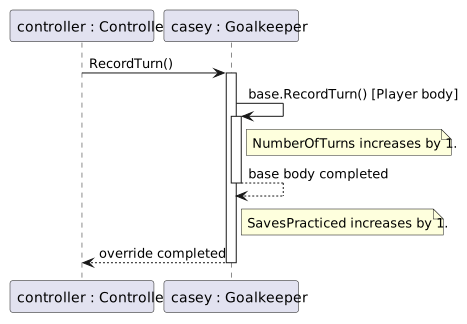
controller : Controllerandcasey : Goalkeeper. - Draw the external request
RecordTurn()to casey and start the override activation. - From that activation draw a self-call on the same lifeline labeled
base.RecordTurn() [Player body]. Add a nested activation for the base body. - Note
NumberOfTurns increases by 1, then end the nested activation with a dashed self-return. Below it noteSavesPracticed increases by 1as the remaining override work. - Return to the original caller only after that remaining work. Save and check that both bodies are represented on one casey lifeline.
Compare the Completed Soccer Diagram
Compare this reference with the diagram you built in Violet. Layout may differ; the source meaning, labels, and relevant connections should agree.
- New
- Changed
- Removed
Trace One Interaction from Top to Bottom
The nested activation ends first. With initial counts zero, the base body makes NumberOfTurns 1 and the remaining override makes SavesPracticed 1.