Build the Diagram in Violet
- Create lifelines
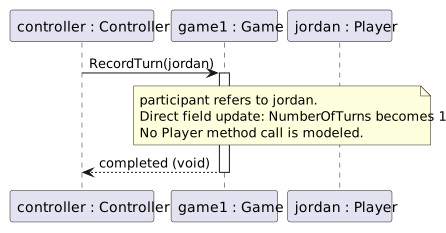
controller : Controller,game1 : Game, andjordan : Player. All are existing objects. - Draw a solid request from controller to game1 labeled
RecordTurn(jordan). Activate game1 while it handles the request. - Add a note spanning the game and player columns:
participant refers to jordan; NumberOfTurns becomes 1. The note explains direct field access rather than another method call. - End the game activation and show the optional dashed
completed (void)control return to controller. Do not draw a creation message for Jordan. - Save and identify receiver, argument, and changed field separately. The argument reference belongs on the request label, not as another new object.
Compare the Completed Soccer Diagram
Compare this reference with the diagram you built in Violet. Layout may differ; the source meaning, labels, and relevant connections should agree.
- New
- Changed
- Removed
Trace One Interaction from Top to Bottom
After the operation, Jordan's count is 1. The third lifeline identifies the argument's target, but no message arrow reaches it because the defined body makes no Player method call.