Matching Values Can Belong to Different Objects
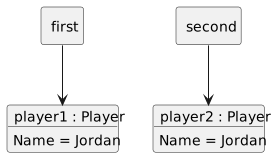
Two Players can both have the name Jordan while remaining two separate objects. Their names match; their objects do not have the same identity.
- New
- Changed
- Removed
Two Players can both have the name Jordan while remaining two separate objects. Their names match; their objects do not have the same identity.
The expression `first.Name == second.Name` compares two names. It can be true even when `first` and `second` refer to different Players.
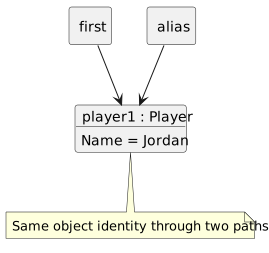
Identity means that two references reach the same object. C# can ask this question directly for class references:
object.ReferenceEquals(first, second)Two separately created Players make this expression false. If `Player alias = first;`, comparing `first` and `alias` makes it true.
Assigning `second.Name = first.Name` makes the names match. It does not turn the Players into one object. Each still has its own fields and can change independently.