Build the Diagram in Violet
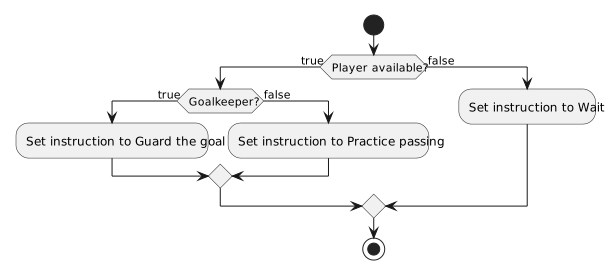
- Create an activity diagram with start connected to
Player available?. - On its
trueroute place a second diamond labeledGoalkeeper?. On itsfalseroute placeSet instruction to Wait. - Connect Goalkeeper? true to
Set instruction to Guard the goaland false toSet instruction to Practice passing. Keep each arrow label next to its own decision. - Merge the inner alternatives, then bring that result together with the outer Wait route before the final node. The diagram may use successive merge diamonds to show the nesting.
- Save and trace an unavailable goalkeeper first. That execution must never visit Goalkeeper?, even though the player's role is known.
Compare the Completed Soccer Diagram
Compare this reference with the diagram you built in Violet. Layout may differ; the source meaning, labels, and relevant connections should agree.
- New
- Changed
- Removed
Trace One Route at a Time
An unavailable goalkeeper selects Wait after only the first check. An available non-goalkeeper reaches both checks and selects Practice passing.