Under Construction
This page is currently being built. Please check back soon.
This page is currently being built. Please check back soon.
Use the goals, acceptance criteria, and nested tasks below to prepare and complete this activity. Follow the stated scope carefully.
Download the starting code.
This is the same starting code used in this week's object and sequence diagram assignments.
Date Night 3.4.zip
Extract the contents of the zip file to the location of your choice.
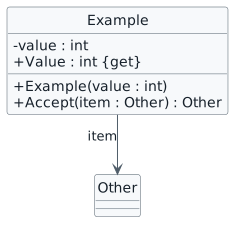
Bus Destination Car
Check the result against this instruction: Using the given starting code, create a UML class diagram to represent the classes listed below, as well as any interfaces they implement.
Open or render your diagram, inspect every label and relationship, and compare it with the code or debugger state. Resolve syntax errors, clipped labels and unreadable crossings before submission.
![Object identity and list order example. object "items : List<Example>" as items object "first : Example" as first { value = 7 } object "second : Example" as second { value = 9 } items --> first : [0] items --> second : [1]](Diagrams/DiagramObjectNotation.light.svg)
Check the result against this instruction: Set a breakpoint on the closing curly brace of ParkVehicle method of theValet class. Start the application. The breakpoint should be hit. Press Continue (F5) to hit the breakpoint again.
Check the result against this instruction: Create a UML object diagram to represent this Valet. Fold in the home, keyRack, and location fields. Depict the parkingGarage and all of its sub-objects.
Open or render your diagram, inspect every label and relationship, and compare it with the code or debugger state. Resolve syntax errors, clipped labels and unreadable crossings before submission.
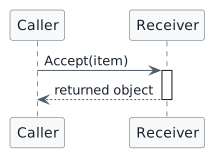
The first or "root" object lifeline on your diagram should be named harry: Guy.
Use [ ] square brackets instead of < > angle brackets when notating a call to an inherited base method.
Check the result against this instruction: Remove all other breakpoints. Set a breakpoint on the line of code that calls Personalize within the GoShopping method in the Guy class. Start the application. Click, Go on county fair date. Using the given starting code, create a UML sequence diagram to represent the flow of the application, starting with call to the Personalize method. Include all method calls within the Personalize method.
DriveVehicleToLocation FindItem PurchaseItem
Check the result against this instruction: The first, unnamed activation bar, on the harry: Guy lifeline represents the GoShopping method, but you need only depict the call to Personalize on your diagram and not the previous code/calls. Specifically, exclude calls to the following methods:
Open or render your diagram, inspect every label and relationship, and compare it with the code or debugger state. Resolve syntax errors, clipped labels and unreadable crossings before submission.
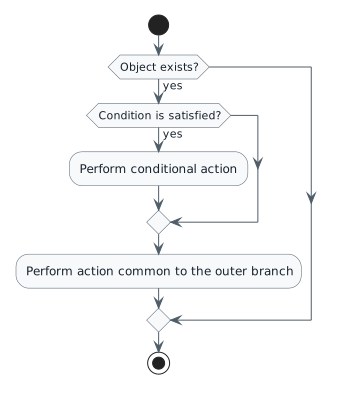
Check the result against this instruction: Using the given starting code, create a UML activity diagram to represent the logic of the contents of the Gal.AcceptGift method.
Open or render your diagram, inspect every label and relationship, and compare it with the code or debugger state. Resolve syntax errors, clipped labels and unreadable crossings before submission.
Save the diagram and submit.
Return to each user story and confirm that you can demonstrate its acceptance criteria. Use the task checkboxes to track completion; a checked box is not a substitute for testing or inspecting the required evidence.
Represent the class view Represent the object view Represent the sequence view Represent the activity viewUse the submission or attendance instructions in this page. For a Feedback System submission, upload the requested ZIP, review and resolve the feedback, and submit the resulting URL to the matching Canvas activity. For a Canvas quiz, enter only the requested answers; for an oral final, complete the scheduling and attendance steps.